Experienced OFAC Sanctions Violation Defense Attorney in Washington, DC
An accusation of violating U.S. sanctions rarely matches what the client understood the deal to be. A payment that cleared through New York, a supplier with a hidden owner, a shipment that changed hands twice: each can be described as a violation, even when no one intended to deal with a sanctioned party.
At Zarkesh Hukuk Bürosu, PC., our OFAC sanctions violation defense lawyers represent companies, banks, and individuals in the United States, the Middle East, Europe, and North Africa.
We test whether a violation actually occurred, build the defenses the law allows, and protect clients from civil and criminal exposure.
The Sanctions Violations We Defend Most Often
Most of the cases we see fall into a handful of patterns. OFAC and prosecutors commonly allege:
- Dealing with blocked persons: transactions with individuals or companies on the SDN List, or with entities they own.
- Embargoed jurisdiction trade: exporting goods or services to, or importing from, jurisdictions such as Iran, Cuba, North Korea, and the Crimea region of Ukraine, where comprehensive sanctions apply.
- Facilitation: a U.S. person approving, financing, or assisting a foreign transaction that the U.S. person could not do directly.
- Causing a violation: a non-U.S. company routing payments through U.S. banks for sanctioned business.
- Sanctions evasion: structuring, stripping payment information, or using front companies to hide a sanctioned party.
- Digital asset transactions: crypto transfers involving sanctioned wallets or exchanges.
Each type carries a different legal standard, and the right defense depends on which one OFAC or the government is pursuing.
Civil Liability and Criminal Exposure
The first question we answer for every client is which kind of case this is. The difference shapes everything that follows.
| Civil (OFAC) | Criminal (DOJ) | |
|---|---|---|
| Standard | Strict liability; intent is not required | Willful violation must be proven |
| Maximum penalty under IEEPA | $377,700 per violation or twice the transaction value | Up to $1 million in fines and up to 20 years in prison |
| Who decides | OFAC, through the enforcement process | A federal court, after indictment |
Civil figures reflect OFAC’s January 2025 inflation adjustment (Federal Register).
The two can run at the same time. An OFAC sanctions violation defense attorney has to manage what is said in a civil response with the criminal case in mind, because statements made to OFAC can reach prosecutors.
In our experience, criminal referrals usually follow signs of concealment: altered payment messages, false end-user certificates, or front companies set up to hide a sanctioned buyer. Spotting that kind of evidence early tells us how carefully each step with OFAC must be handled.

Defenses to a Sanctions Violation Allegation
Strict liability does not mean there is no defense. In our experience, the strongest cases begin with a close look at whether the law reaches the conduct at all. Depending on the facts, defenses can include:
- No U.S. nexus: the transaction involved no U.S. person, U.S. dollars, U.S. bank, or U.S.-origin goods.
- License authorization: the activity fell within a general license or a specific license.
- Statutory exemptions: certain informational materials, personal communications, and humanitarian transactions fall outside many programs.
- Ownership below the threshold: the counterparty was not actually blocked under the 50 Percent Rule.
- Statute of limitations: the conduct falls outside the ten-year window that now applies to most IEEPA and TWEA violations.
- Lack of willfulness: in a criminal case, the government must prove the defendant knew the conduct was unlawful.
When no full defense applies, the same facts often support a lower penalty or a less serious outcome.
The 50 Percent Rule and Hidden Ownership
A large share of the violation claims we review turn on ownership, not on a name that appears on the SDN List. Under OFAC’s 50 Percent Rule, any entity owned 50 percent or more, directly or indirectly, by one or more blocked persons is itself blocked, even if it is not listed.
That makes ownership math central to the defense. An OFAC sanctions-violation defense attorney will trace each layer of ownership, separate control from ownership (control alone does not trigger the rule), and check the dates when ownership changed.
If a counterparty fell below the threshold at the time of the transaction, it was not blocked, and the alleged violation may not exist.
Defending Individuals and Executives
Sanctions cases are not limited to companies. Three of OFAC’s 14 public enforcement actions in 2025 named individuals, and criminal cases routinely charge the people who approved or arranged the deals.
An executive’s interests can differ sharply from the employer’s. A company may choose to cooperate in a way that shifts blame to individuals.
Our OFAC sanctions violation defense lawyers advise executives, compliance officers, and dual nationals on separate counsel, interview preparation, and travel risk when a case may cross borders.
That travel risk is real. A pending U.S. case, including a sealed indictment, can lead to arrest while traveling internationally.
Before speaking with investigators, an individual should know whether they are viewed as a witness or a subject, and whether company counsel can properly represent them.
Sanctions Violation Defense for Companies Outside the United States
Many of our clients are trading companies, banks, and exchange houses in the UAE, Turkey, Europe, and North Africa. For them, an allegation usually rests on a single U.S. connection, such as a dollar payment cleared through a U.S. correspondent bank.
That connection is often the weakest part of the government’s case, and our OFAC sanctions violation defense attorneys examine it closely. We also review what local law permitted, what the client knew about its counterparties, and whether the conduct overlaps with designation risk. Where it does, we coordinate the defense with SDN list removal and unblocking applications.
Ayrıca aşağıdaki uygulama alanlarını da temsil ediyoruz:
- OFAC Enforcement Defense
- OFAC Civil Penalty Mitigation
- OFAC Voluntary Self-Disclosure
- OFAC Soruşturmaları
- SDN Listinin Silinmesi
- Export Control Compliance
Speak With an OFAC Sanctions Violation Defense Lawyer
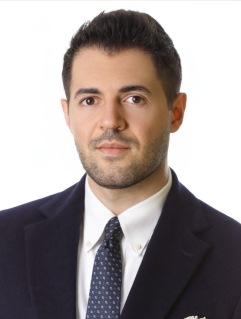
Mohsen Zarkesh has focused on OFAC sanctions since earning his J.D. from American University Washington College of Law in 2017, the same year he was admitted to the District of Columbia Bar.
He managed the sanctions practice at a Washington white-collar defense firm before founding Zarkesh Hukuk Bürosu, PC. in 2020, and was recognized as a Washington, D.C. Rising Star by Super Lawyers from 2020 to 2022.
Mohsen handles each case personally, from the first review of the allegations through resolution. If OFAC is still gathering facts, our OFAC investigation work may come first.
If you have been accused of a sanctions violation, or believe an accusation is coming, book a consultation with our OFAC sanctions violation defense attorneys before you respond to anyone.
Frequently Asked Questions
Can I be penalized for an OFAC violation I did not know about?
What is the difference between a civil and a criminal sanctions case?
Does the 50 Percent Rule apply if a sanctioned person only controls a company?
Can a company outside the United States be charged with violating U.S. sanctions?
How long does the government have to bring a sanctions case?
İlgili Bloglar:
- Who is Legally Bound by OFAC Sanctions Regulations?
- What Is OFAC? A Complete Guide to the Office of Foreign Assets Control